更多科大概覽

4月28日
3:30pm - 4:30pm
研討會, 演講, 講座

Understanding the role of diet in shaping the ecology and evolution of species is a steadfast pursuit. Yet, resolving the relative importance of dietary sources in an organisms’ energy and growth budgets is particularly difficult within nutritional symbioses – such as those ubiquitous amongst shallow marine invertebrates (corals, bivalves, jellyfish, sponges) and their microbial symbionts. Increasingly, stable isotope approaches are employed to resolve diet – often as an alternative to exhaustive and potentially misleading examinations of ingestion (e.g. particle removal, substrate depletion, etc.). Here, I will share results from a novel application of Stable Isotope Bayesian Ellipses in R (SIBER) to symbiotic partnerships – from reef building corals, to giant clams. Heterotrophy – as evidenced by little overlap in host and symbiont isotopic niche areas correlates well with large polyp size (corals) and slower growth rates (clams) – whereas autotrophy is linked to an elevated conservation status. Other factors, such as seasonal variation in trophic plasticity, fatty acid and amino acid compound-specific isotope analysis, and how all of this can inform effective management and restoration action will be discussed.
4月28日
3:30pm - 4:30pm

地點
4472 (lift 25-26)
講者/表演者
David Baker
Hong Kong University
Hong Kong University
主辦單位
Department of Ocean Science
聯絡方法
Please contact Alex Wyatt (wyatt@ust.hk)
付款詳情
對象
語言
英語
其他活動
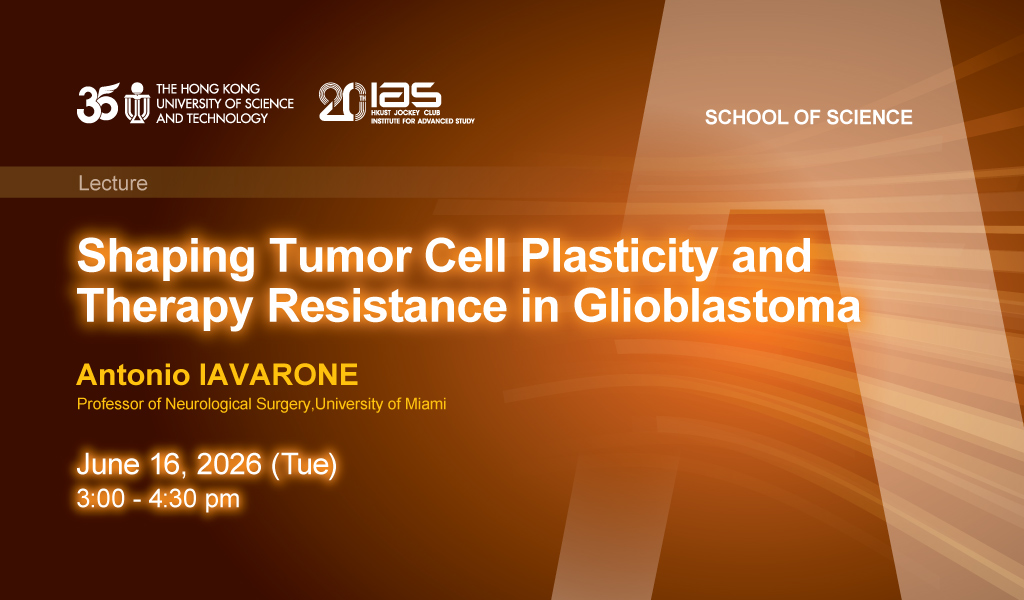
6月16日
研討會, 演講, 講座
IAS / School of Science Joint Lecture - Shaping Tumor Cell Plasticity and Therapy Resistance in Glioblastoma
Abstract
Tumor heterogeneity fueled by plasticity and genetic diversification of cancer cells is key to therapy failure of malignant glioma. The speaker's team implemented spatial and genetic p...
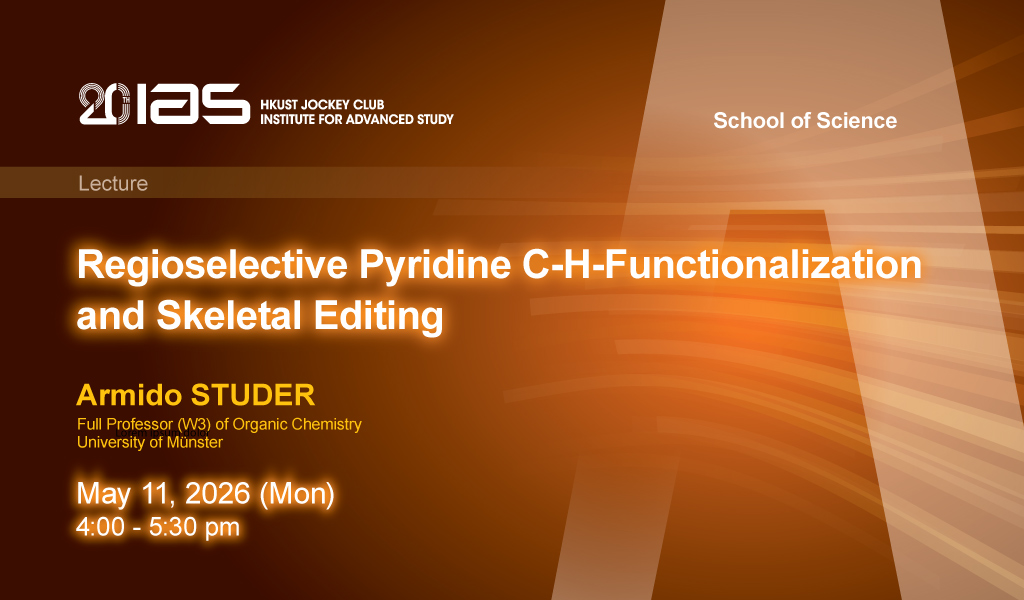
5月11日
研討會, 演講, 講座
IAS / School of Science Joint Lecture - Regioselective Pyridine C-H-Functionalization and Skeletal Editing
Abstract
Pyridines belong to the most abundant heteroarenes in medicinal chemistry and in agrochemical industry. In the lecture, highly regioselective pyridine C-H functionalization through a d...