更多科大概览

1月28日
3:30pm - 4:30pm
研讨会, 演讲, 讲座

East Asia has undergone dramatic socioeconomic and environmental changes over the past few decades. In this talk, we will examine a few examples of how such changes may have led to unexpected human health and ecological consequences via Earth system connections. Integrating long-term datasets with Earth system modeling, for instance, we will show how land cover and climatic changes in East Asian deserts might have affected dust emissions there, thus influencing dust air quality in China and deposition onto the North Pacific Ocean, where dust provides nutrients for marine ecosystems. We will further show how dietary changes in the Chinese population, mainly in the form of higher meat consumption, might have enhanced agricultural ammonia emissions and worsened particulate matter pollution in China, thus leading to more premature deaths. We will further discuss how more sustainable dietary options and agricultural/land-use management may help alleviate some of these pressing environmental problems.
1月28日
3:30pm - 4:30pm

地点
(provisionally, TBC) 5583, Lift 27-28
讲者/表演者
Amos Tai
CUHK
CUHK
主办单位
Department of Ocean Science
联系方法
(please contact jclmak@ust.hk for Zoom link)
付款详情
Fee
对象
Faculty and staff, HKUST Family, PG students, UG students
语言
英语
其他活动
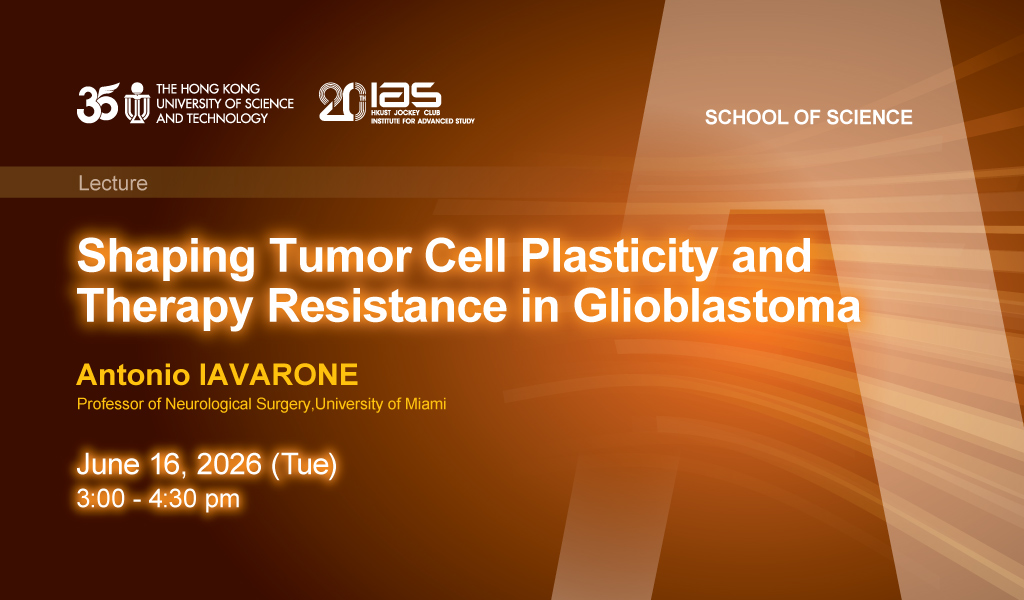
6月16日
研讨会, 演讲, 讲座
IAS / School of Science Joint Lecture - Shaping Tumor Cell Plasticity and Therapy Resistance in Glioblastoma
Abstract
Tumor heterogeneity fueled by plasticity and genetic diversification of cancer cells is key to therapy failure of malignant glioma. The speaker's team implemented spatial and genetic p...
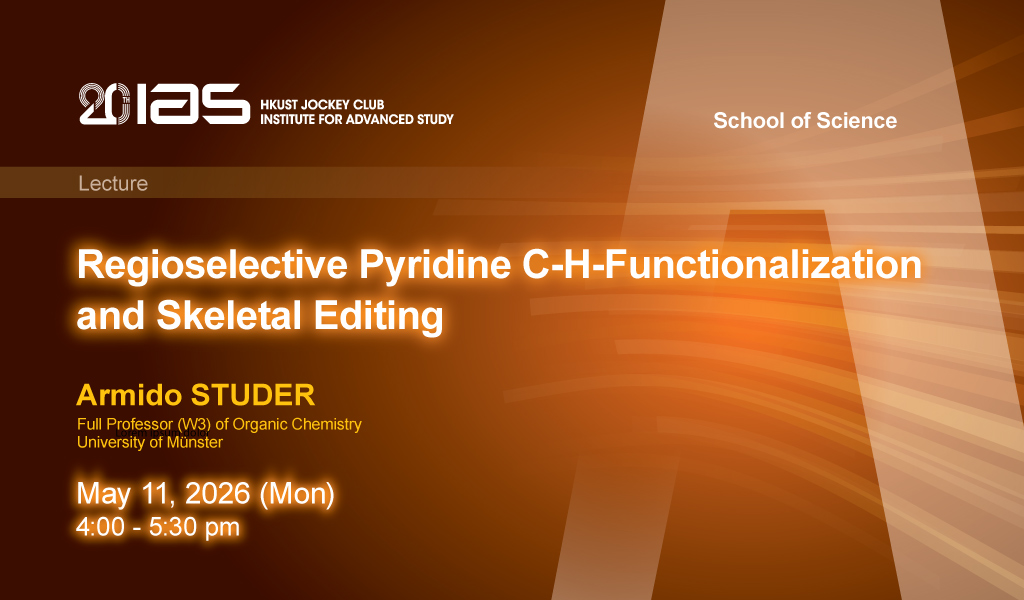
5月11日
研讨会, 演讲, 讲座
IAS / School of Science Joint Lecture - Regioselective Pyridine C-H-Functionalization and Skeletal Editing
Abstract
Pyridines belong to the most abundant heteroarenes in medicinal chemistry and in agrochemical industry. In the lecture, highly regioselective pyridine C-H functionalization through a d...