More about HKUST

9 Mar 2021
9:30am - 10:30am
Seminar, Lecture, Talk

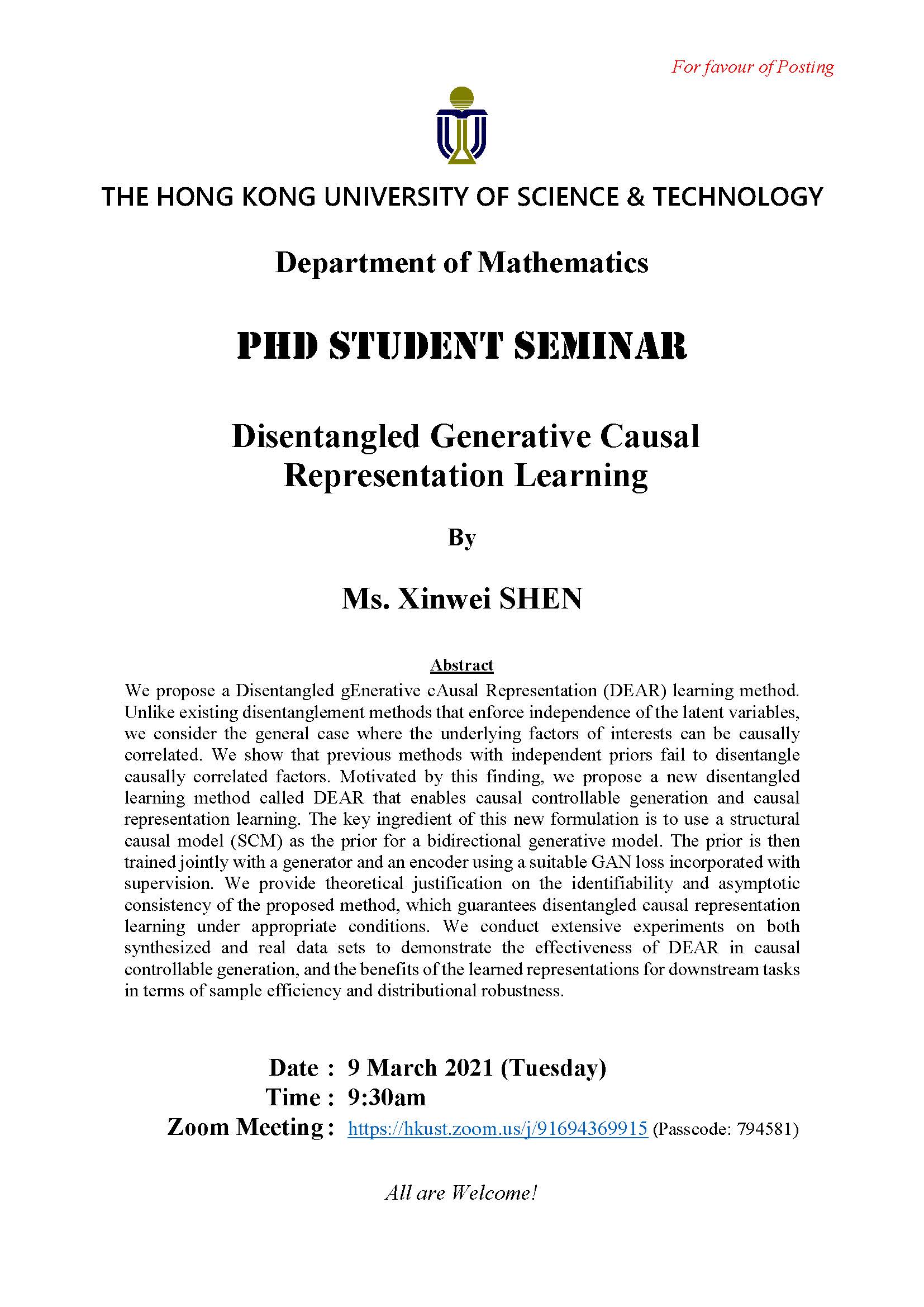
We propose a Disentangled gEnerative cAusal Representation (DEAR) learning method. Unlike existing disentanglement methods that enforce independence of the latent variables, we consider the general case where the underlying factors of interests can be causally correlated. We show that previous methods with independent priors fail to disentangle causally correlated factors. Motivated by this finding, we propose a new disentangled learning method called DEAR that enables causal controllable generation and causal representation learning. The key ingredient of this new formulation is to use a structural causal model (SCM) as the prior for a bidirectional generative model. The prior is then trained jointly with a generator and an encoder using a suitable GAN loss incorporated with supervision. We provide theoretical justification on the identifiability and asymptotic consistency of the proposed method, which guarantees disentangled causal representation learning under appropriate conditions. We conduct extensive experiments on both synthesized and real data sets to demonstrate the effectiveness of DEAR in causal controllable generation, and the benefits of the learned representations for downstream tasks in terms of sample efficiency and distributional robustness.
9 Mar 2021
9:30am - 10:30am
Where
https://hkust.zoom.us/j/91694369915 (Passcode: 794581)
Speakers/Performers
Ms. Xinwei SHEN
Organizer(S)
Department of Mathematics
Contact/Enquiries
Payment Details
Audience
Alumni, Faculty and staff, PG students, UG students
Language(s)
English
Other Events
16 Jun 2026
Seminar, Lecture, Talk
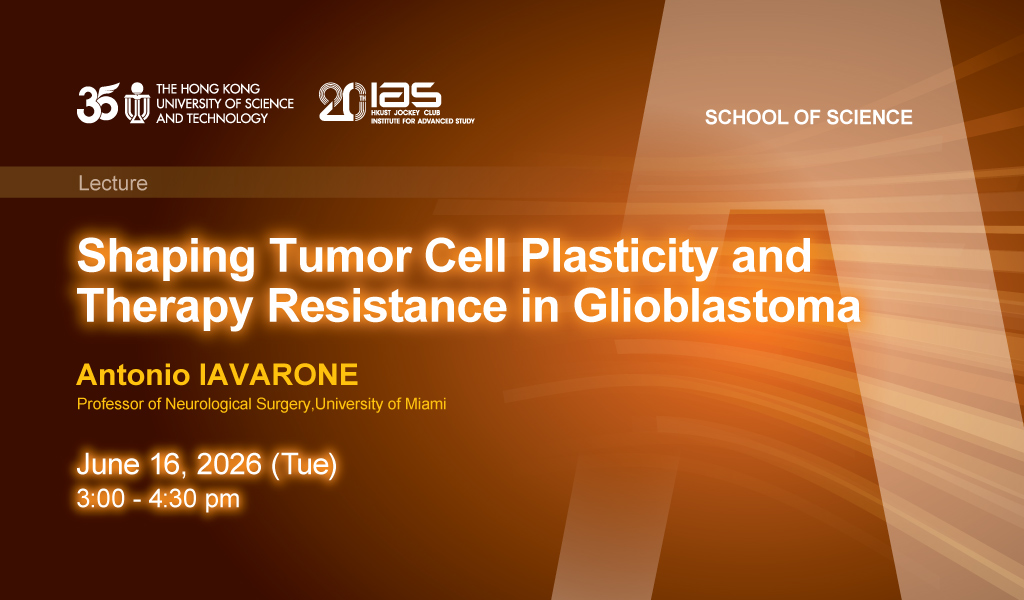
IAS / School of Science Joint Lecture - Shaping Tumor Cell Plasticity and Therapy Resistance in Glioblastoma
Abstract
Tumor heterogeneity fueled by plasticity and genetic diversification of cancer cells is key to therapy failure of malignant glioma. The speaker's team implemented spatial and genetic p...
11 May 2026
Seminar, Lecture, Talk
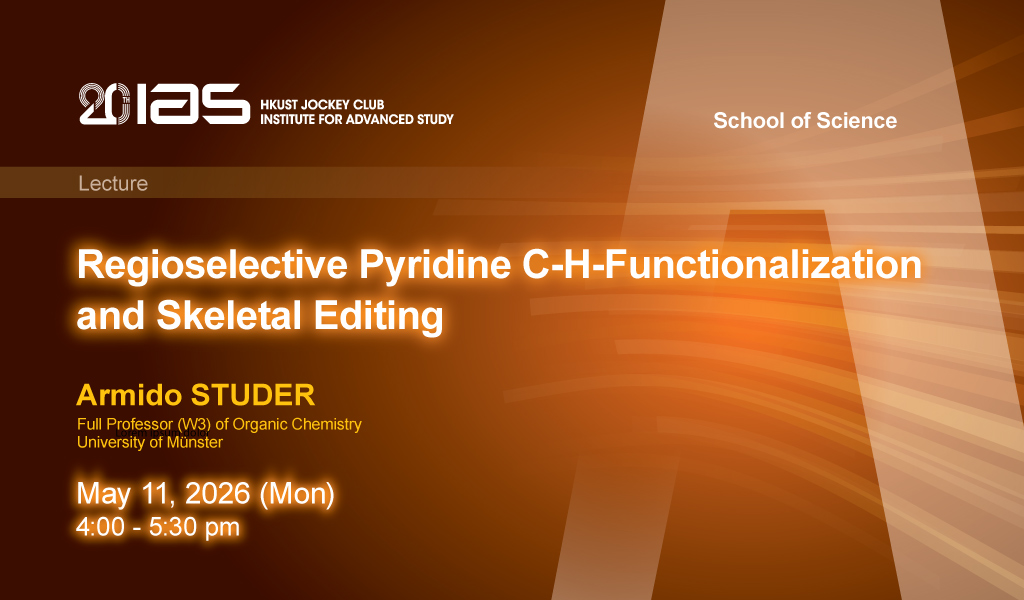
IAS / School of Science Joint Lecture - Regioselective Pyridine C-H-Functionalization and Skeletal Editing
Abstract
Pyridines belong to the most abundant heteroarenes in medicinal chemistry and in agrochemical industry. In the lecture, highly regioselective pyridine C-H functionalization through a d...