More about HKUST

10 Sep 2021
10:00am - 11:00am
Seminar, Lecture, Talk

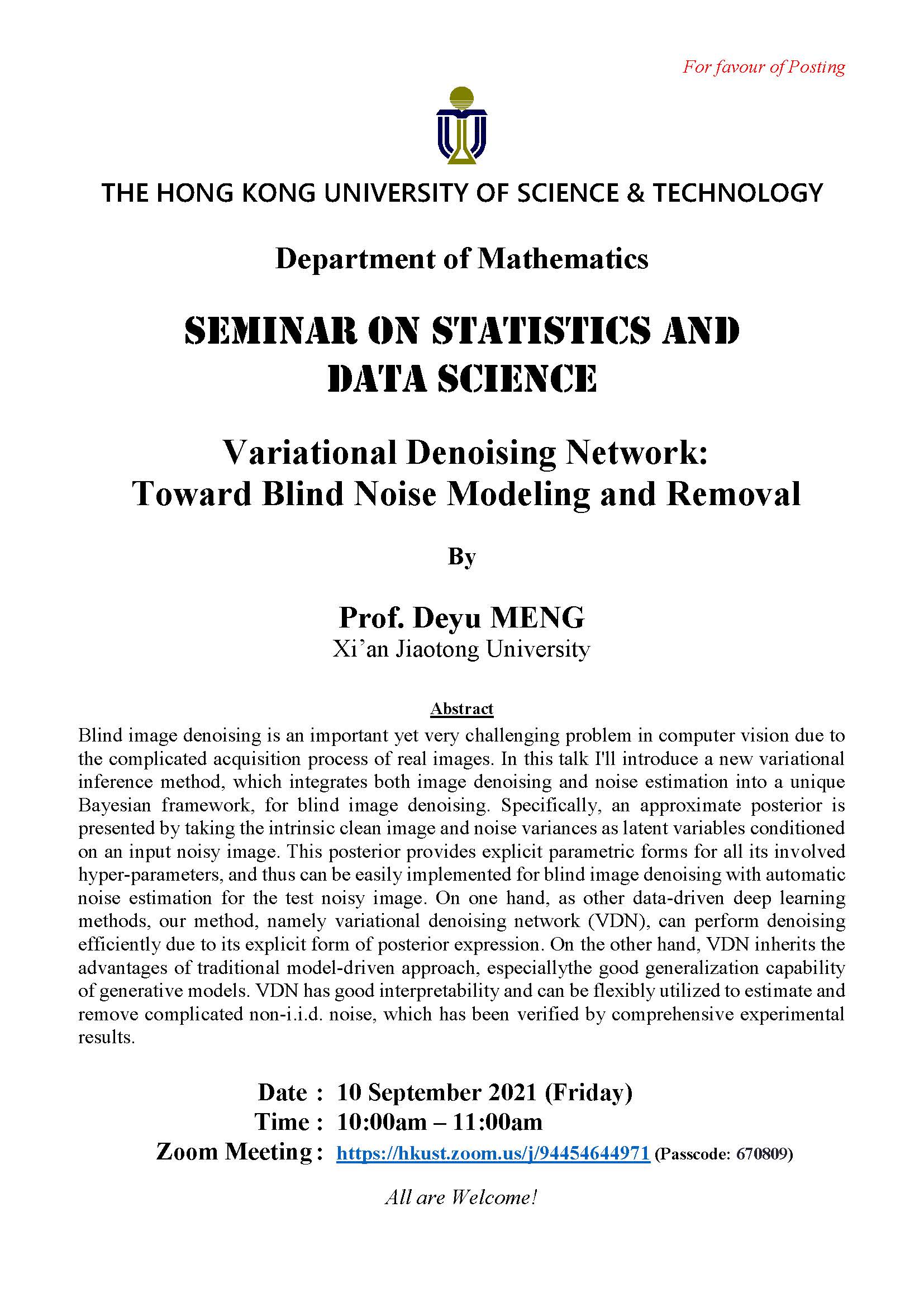
Blind image denoising is an important yet very challenging problem in computer vision due to the complicated acquisition process of real images. In this talk I'll introduce a new variational inference method, which integrates both image denoising and noise estimation into a unique Bayesian framework, for blind image denoising. Specifically, an approximate posterior is presented by taking the intrinsic clean image and noise variances as latent variables conditioned on an input noisy image. This posterior provides explicit parametric forms for all its involved hyper-parameters, and thus can be easily implemented for blind image denoising with automatic noise estimation for the test noisy image. On one hand, as other data-driven deep learning methods, our method, namely variational denoising network (VDN), can perform denoising efficiently due to its explicit form of posterior expression. On the other hand, VDN inherits the advantages of traditional model-driven approach, especiallythe good generalization capability of generative models. VDN has good interpretability and can be flexibly utilized to estimate and remove complicated non-i.i.d. noise, which has been verified by comprehensive experimental results.
10 Sep 2021
10:00am - 11:00am

Where
https://hkust.zoom.us/j/94454644971 (Passcode: 670809)
Speakers/Performers
Prof. Deyu MENG
Xi’an Jiaotong University
Xi’an Jiaotong University
Organizer(S)
Department of Mathematics
Contact/Enquiries
Payment Details
Audience
Alumni, Faculty and staff, PG students, UG students
Language(s)
English
Other Events
16 Jun 2026
Seminar, Lecture, Talk
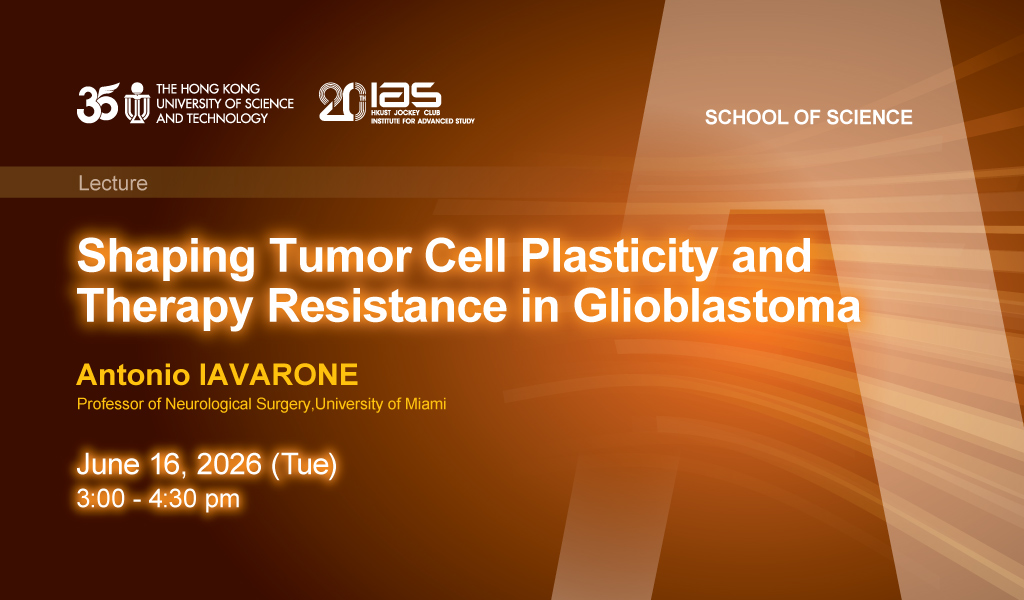
IAS / School of Science Joint Lecture - Shaping Tumor Cell Plasticity and Therapy Resistance in Glioblastoma
Abstract
Tumor heterogeneity fueled by plasticity and genetic diversification of cancer cells is key to therapy failure of malignant glioma. The speaker's team implemented spatial and genetic p...
11 May 2026
Seminar, Lecture, Talk
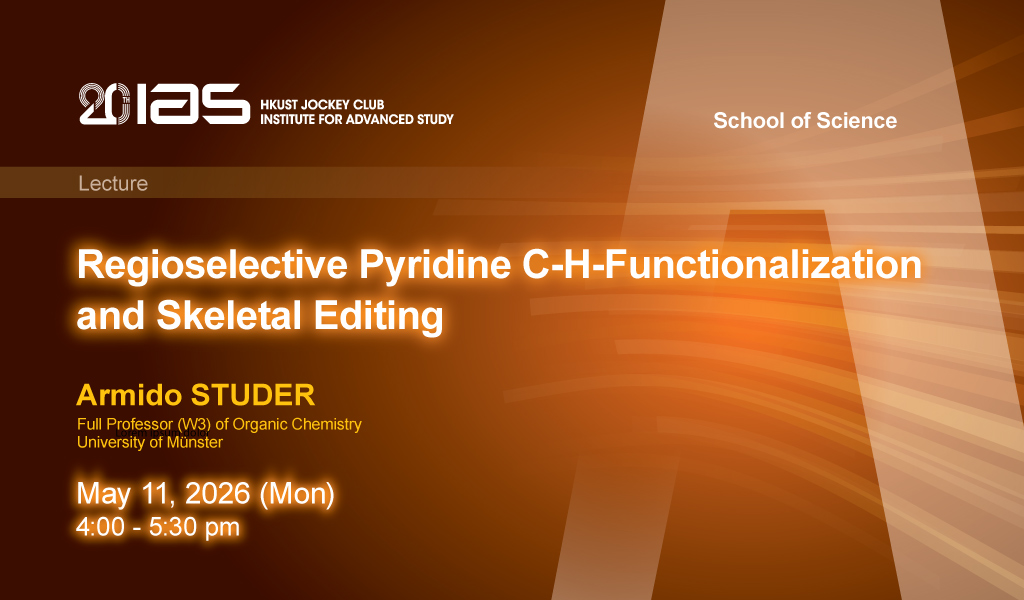
IAS / School of Science Joint Lecture - Regioselective Pyridine C-H-Functionalization and Skeletal Editing
Abstract
Pyridines belong to the most abundant heteroarenes in medicinal chemistry and in agrochemical industry. In the lecture, highly regioselective pyridine C-H functionalization through a d...