More about HKUST
26 Nov 2021
3:30pm - 4:30pm
Seminar, Lecture, Talk

(please contact jclmak@ust.hk for Zoom link)
The AMOC plays a crucial role in regulating global climate. This part of the thermohaline circulation is often considered very sensitive to freshwater input at high latitude. As Arctic warms about twice as fast as the rest of the planet, Greenland ice-sheet has been melting during the last century, contributing to about 30% of the observed sea-level rise. The potential effects of the freshwater inputs from the demise of the Greenland ice sheet on global circulation are still unresolved. We still do not fully understand how the intensity, timing and location of freshwater inputs could impact open-ocean convection. While we generally though freshwater input would reduce drastically or even completely shut down the convection in the Nordic Seas, recent studies contradicted this view. These studies concluded that a relatively thick, cold, and fresh, summer surface-mixed layer originating from ice sheet melting characterized the past interglacial period known as Marine isotope stage 11 (~400 000 years ago). This interglacial period with active ocean convection was thus, paradoxically, characterized by upper-ocean conditions, which are thought to prohibit convective mixing and deep-water formation. Thus, unravelling the effects of freshwater inputs is crucial to better understand modern oceanic changes and predict near-future climate. A change in the upper-ocean stratification in the polar North Atlantic could have major impacts on convective processes and North Atlantic circulation, which, in turn, could create major climate disturbances including rainfall and drought frequency, Arctic sea ice, and hurricane/typhoon activity.
26 Nov 2021
3:30pm - 4:30pm
Where
5560 (lift 27-28)
Speakers/Performers
Benoit Thibodeau
CUHK
CUHK
Organizer(S)
Department of Ocean Science
Contact/Enquiries
(please contact jclmak@ust.hk for Zoom link)
Payment Details
Fee
Audience
Alumni, Faculty and staff, PG students, UG students
Language(s)
English
Other Events
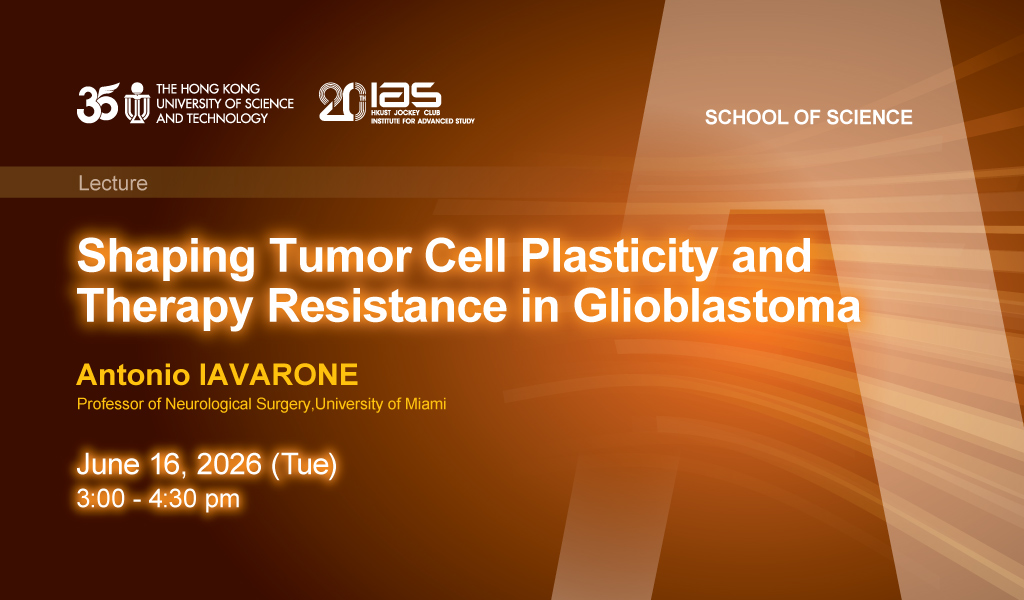
16 Jun 2026
Seminar, Lecture, Talk
IAS / School of Science Joint Lecture - Shaping Tumor Cell Plasticity and Therapy Resistance in Glioblastoma
Abstract
Tumor heterogeneity fueled by plasticity and genetic diversification of cancer cells is key to therapy failure of malignant glioma. The speaker's team implemented spatial and genetic p...
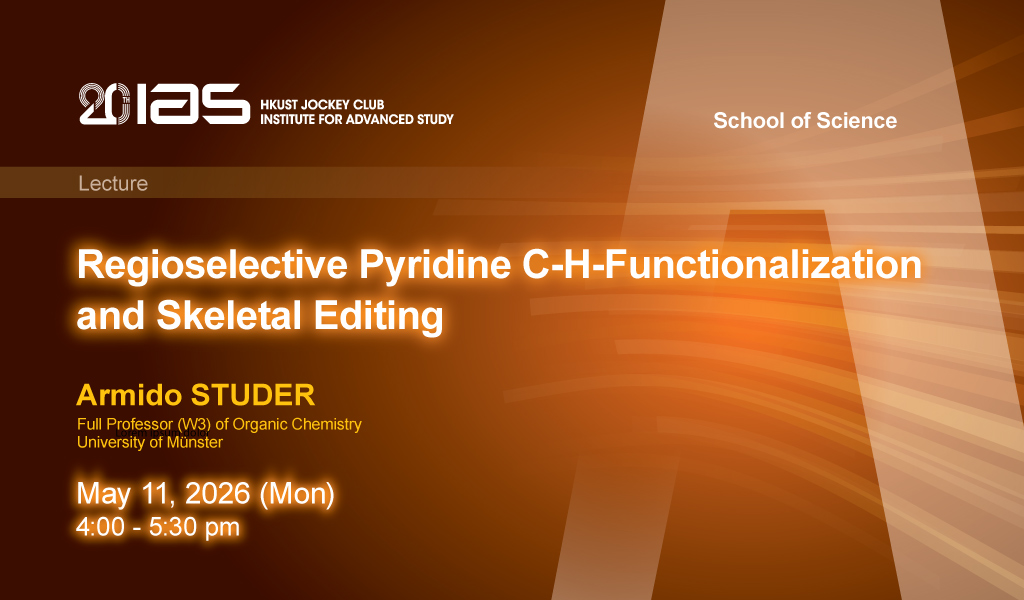
11 May 2026
Seminar, Lecture, Talk
IAS / School of Science Joint Lecture - Regioselective Pyridine C-H-Functionalization and Skeletal Editing
Abstract
Pyridines belong to the most abundant heteroarenes in medicinal chemistry and in agrochemical industry. In the lecture, highly regioselective pyridine C-H functionalization through a d...