More about HKUST

12 May 2023
10:30am - 11:30am
Seminar, Lecture, Talk

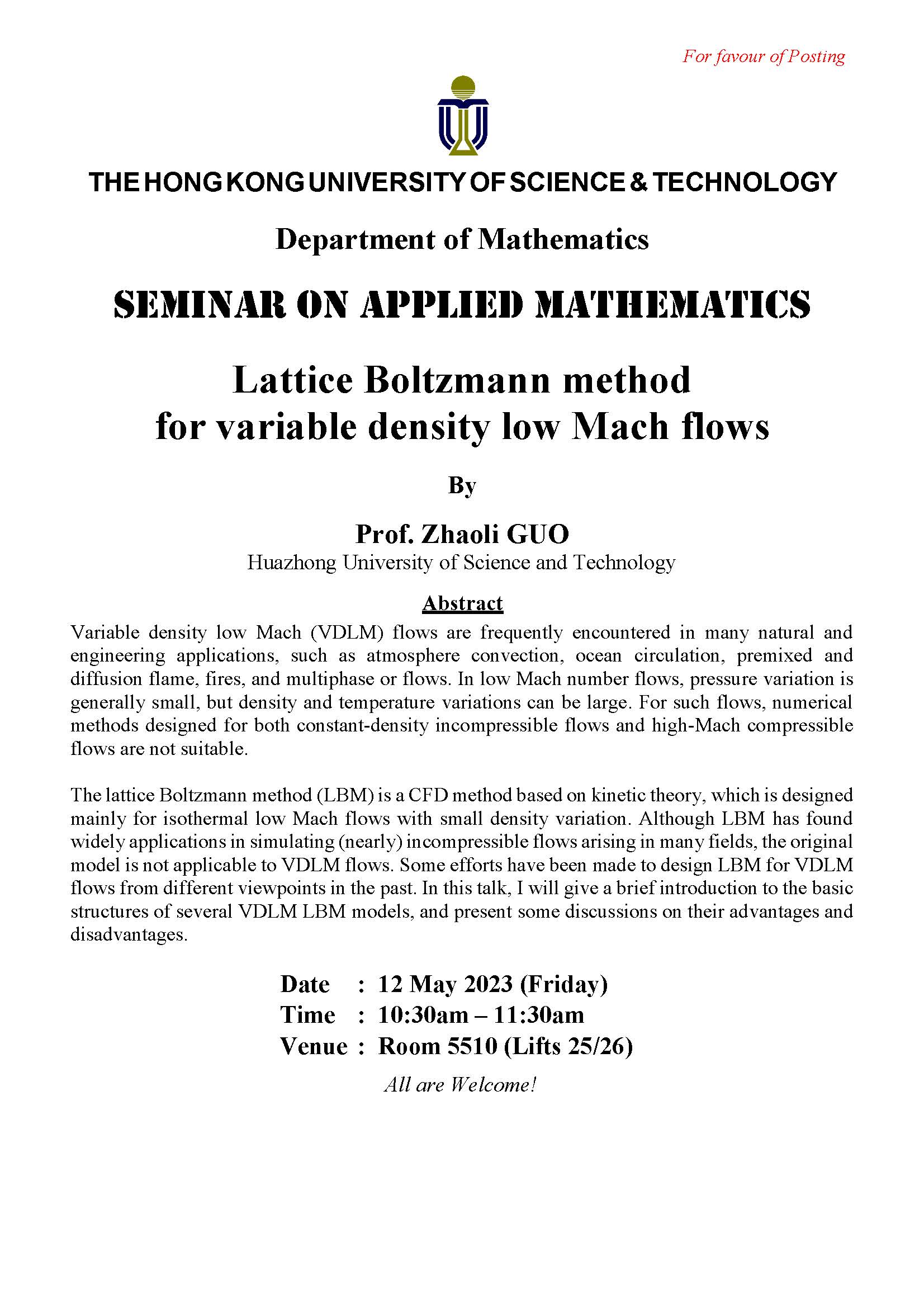
Variable density low Mach (VDLM) flows are frequently encountered in many natural and engineering applications, such as atmosphere convection, ocean circulation, premixed and diffusion flame, fires, and multiphase or flows. In low Mach number flows, pressure variation is generally small, but density and temperature variations can be large. For such flows, numerical methods designed for both constant-density incompressible flows and high-Mach compressible flows are not suitable.
The lattice Boltzmann method (LBM) is a CFD method based on kinetic theory, which is designed mainly for isothermal low Mach flows with small density variation. Although LBM has found widely applications in simulating (nearly) incompressible flows arising in many fields, the original model is not applicable to VDLM flows. Some efforts have been made to design LBM for VDLM flows from different viewpoints in the past. In this talk, I will give a brief introduction to the basic structures of several VDLM LBM models, and present some discussions on their advantages and disadvantages.
12 May 2023
10:30am - 11:30am

Where
Room 5510 (Lifts 25/26)
Speakers/Performers
Prof. Zhaoli GUO
Huazhong University of Science and Technology
Huazhong University of Science and Technology
Organizer(S)
Department of Mathematics
Contact/Enquiries
Payment Details
Audience
Alumni, Faculty and staff, PG students, UG students
Language(s)
English
Other Events
16 Jun 2026
Seminar, Lecture, Talk
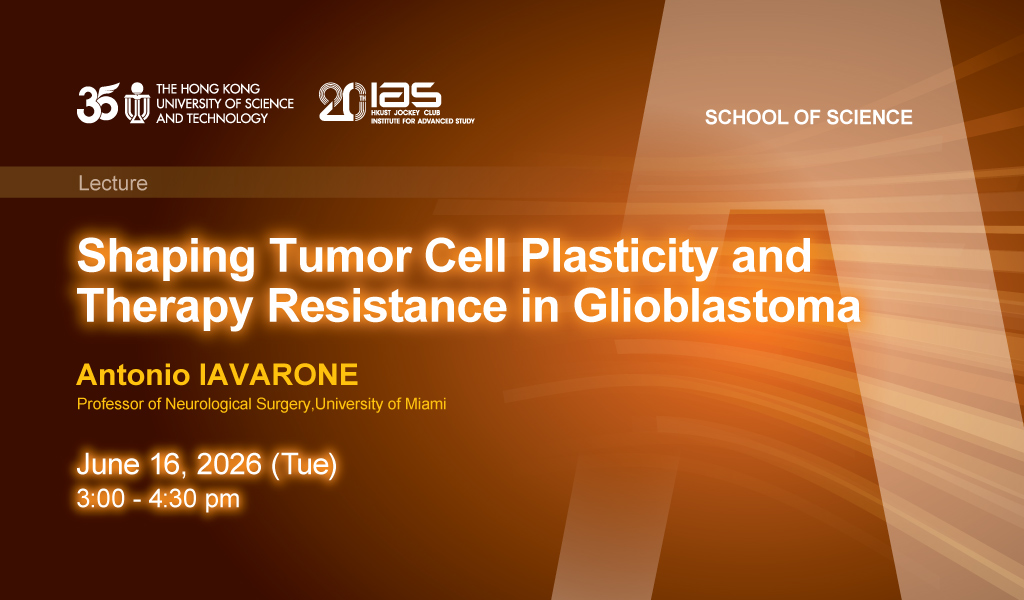
IAS / School of Science Joint Lecture - Shaping Tumor Cell Plasticity and Therapy Resistance in Glioblastoma
Abstract
Tumor heterogeneity fueled by plasticity and genetic diversification of cancer cells is key to therapy failure of malignant glioma. The speaker's team implemented spatial and genetic p...
11 May 2026
Seminar, Lecture, Talk
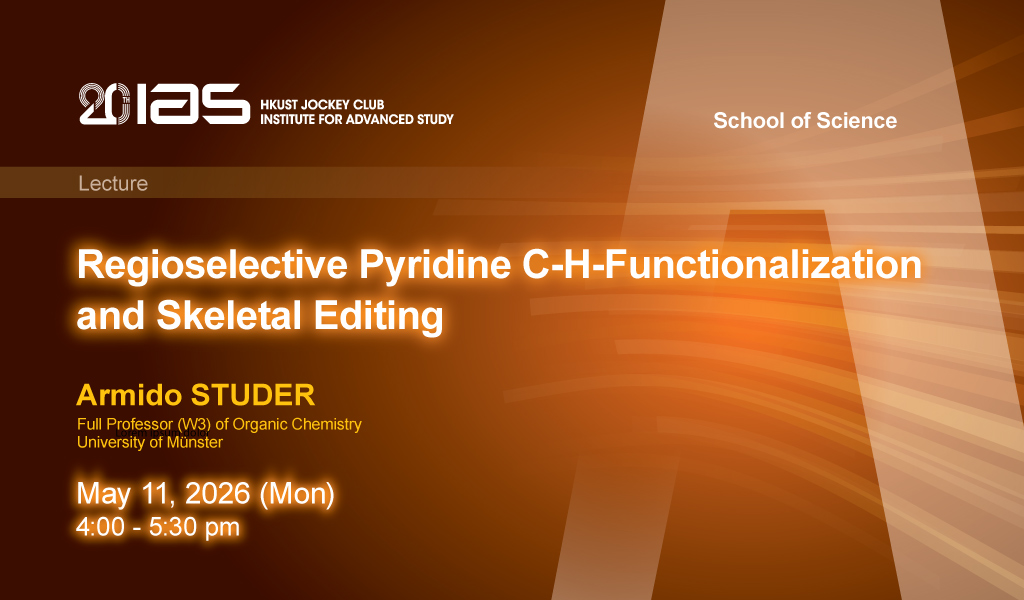
IAS / School of Science Joint Lecture - Regioselective Pyridine C-H-Functionalization and Skeletal Editing
Abstract
Pyridines belong to the most abundant heteroarenes in medicinal chemistry and in agrochemical industry. In the lecture, highly regioselective pyridine C-H functionalization through a d...