More about HKUST

25 Nov 2022
3:30pm - 4:30pm
Seminar, Lecture, Talk

Anthropogenic activities are causing the global climate to change at an unprecedented rate. A plethora of studies have now shown that such rapid changes in the environment, including thermal anomalies and acidification of aquatic ecosystems can have severe consequences on the ecology as well as crucial behaviours of aquatic organisms. Over the past years we have been investigating the impacts of environmental change on marine fishes in particular on the brain, through experiments, unique field collections, molecular work and computational analyses to understand the neuromolecular responses. Through transgenerational exposure to elevated CO2 we deciphered short-term, developmental effects as well as the influence of parental effects on the brain. Furthermore, collections in the wild at CO2 seeps allowed to understand the common and variable responses among species and revealed different levels of plasticity and adaptive potentials owing to evolutionary rates. Lastly, we find that climate change-stressors also alter crucial cooperative behaviors in fish, such as cleaning interactions, and we exhibit the changes to underlying molecular mechanisms in different brain regions revealing a major influence on mutualism maintenance with potential large-scale effects on the coral reef ecosystems.
25 Nov 2022
3:30pm - 4:30pm

Where
2303 (Lift 17-18)
Speakers/Performers
Celia Schunter
HKU
HKU
Organizer(S)
Department of Ocean Science
Contact/Enquiries
Julian Mak at jclmak@ust.hk
Payment Details
Audience
Language(s)
English
Other Events
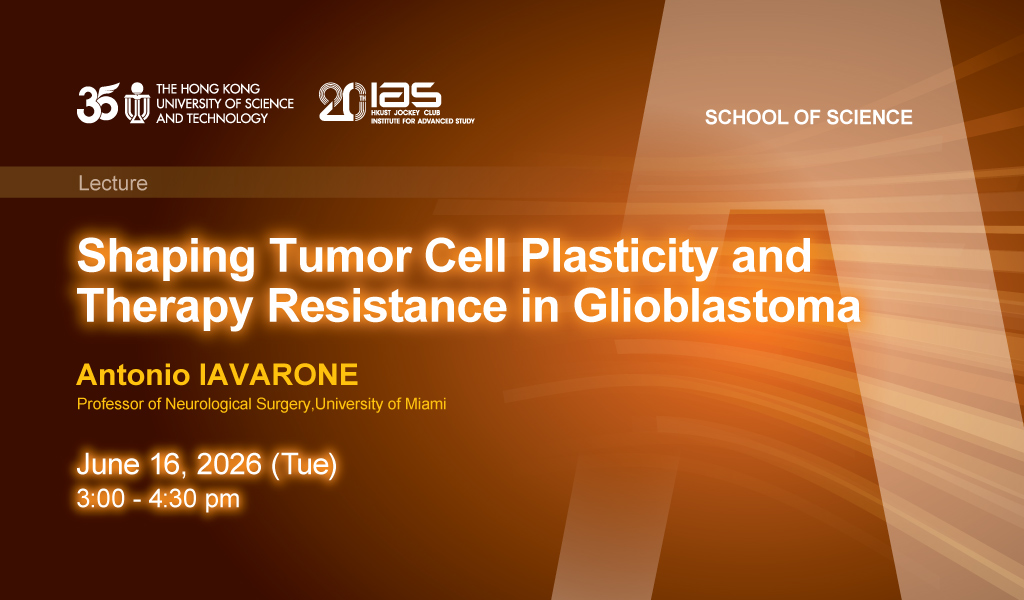
16 Jun 2026
Seminar, Lecture, Talk
IAS / School of Science Joint Lecture - Shaping Tumor Cell Plasticity and Therapy Resistance in Glioblastoma
Abstract
Tumor heterogeneity fueled by plasticity and genetic diversification of cancer cells is key to therapy failure of malignant glioma. The speaker's team implemented spatial and genetic p...
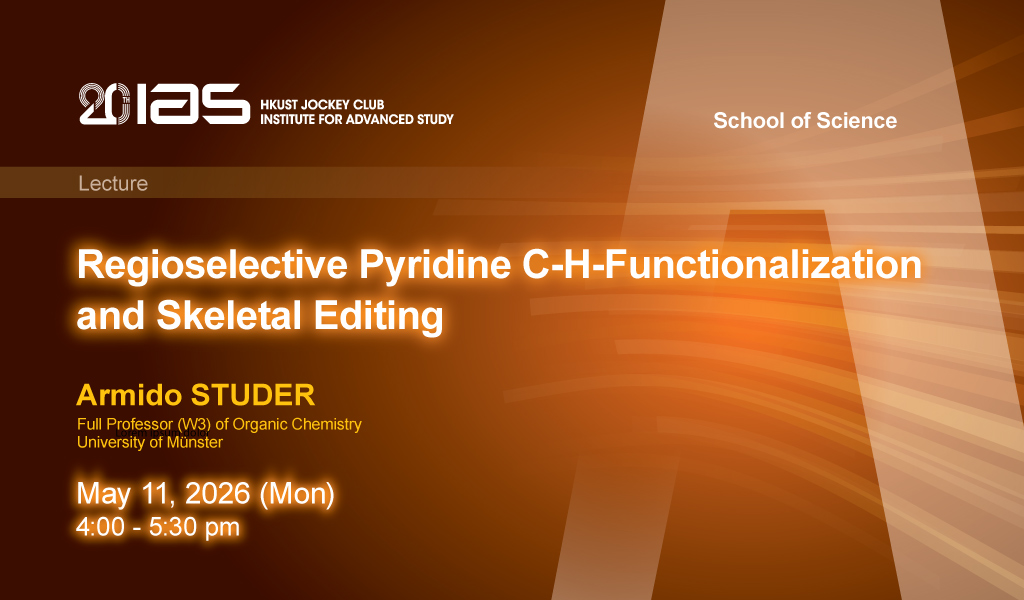
11 May 2026
Seminar, Lecture, Talk
IAS / School of Science Joint Lecture - Regioselective Pyridine C-H-Functionalization and Skeletal Editing
Abstract
Pyridines belong to the most abundant heteroarenes in medicinal chemistry and in agrochemical industry. In the lecture, highly regioselective pyridine C-H functionalization through a d...