More about HKUST

21 Jun 2019
9:25am - 10:25am
Seminar, Lecture, Talk

Abstract
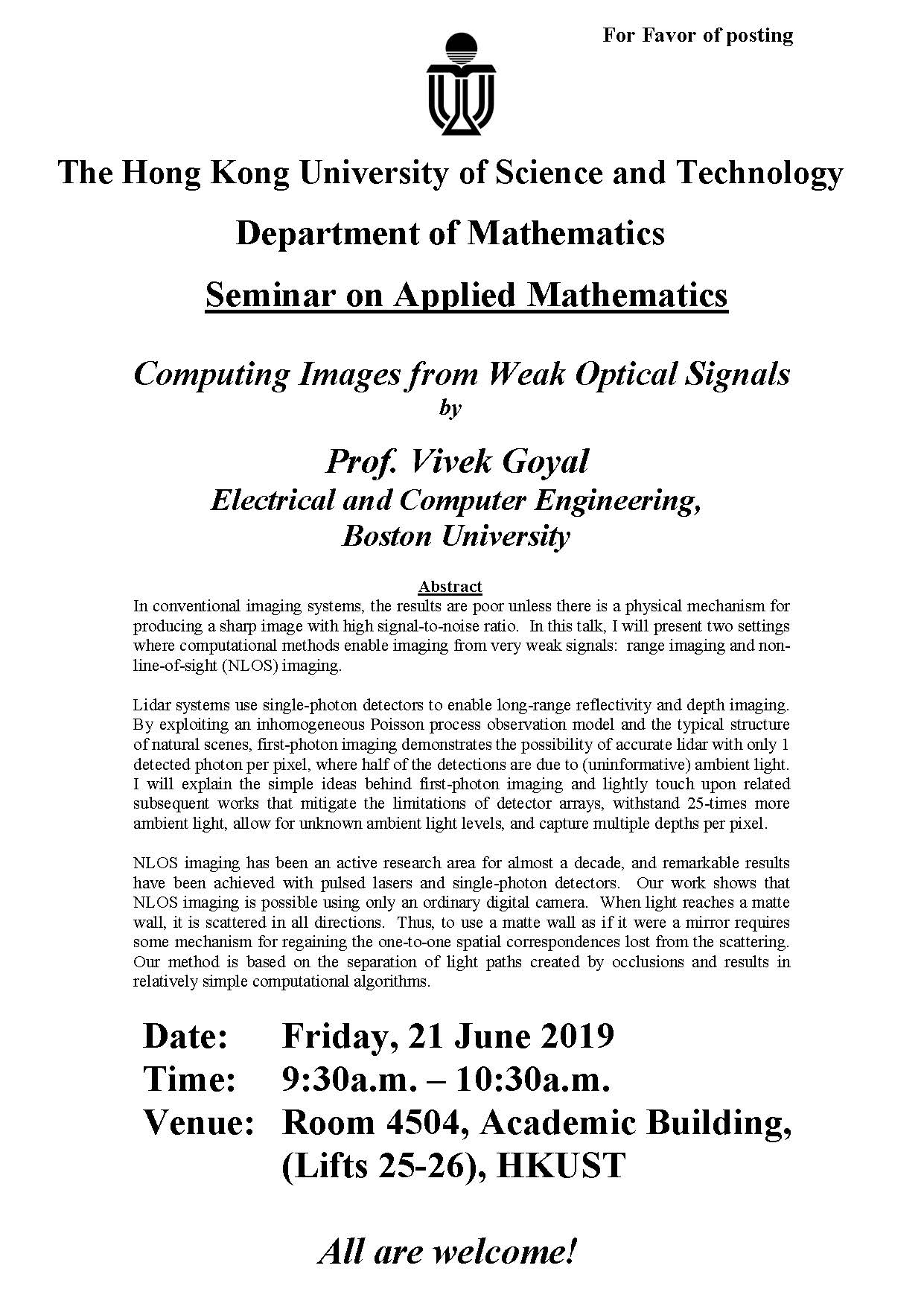
In conventional imaging systems, the results are poor unless there is a physical mechanism for producing a sharp image with high signal-to-noise ratio. In this talk, I will present two settings where computational methods enable imaging from very weak signals: range imaging and non-line-of-sight (NLOS) imaging.
Lidar systems use single-photon detectors to enable long-range reflectivity and depth imaging. By exploiting an inhomogeneous Poisson process observation model and the typical structure of natural scenes, first-photon imaging demonstrates the possibility of accurate lidar with only 1 detected photon per pixel, where half of the detections are due to (uninformative) ambient light. I will explain the simple ideas behind first-photon imaging and lightly touch upon related subsequent works that mitigate the limitations of detector arrays, withstand 25-times more ambient light, allow for unknown ambient light levels, and capture multiple depths per pixel.
NLOS imaging has been an active research area for almost a decade, and remarkable results have been achieved with pulsed lasers and single-photon detectors. Our work shows that NLOS imaging is possible using only an ordinary digital camera. When light reaches a matte wall, it is scattered in all directions. Thus, to use a matte wall as if it were a mirror requires some mechanism for regaining the one-to-one spatial correspondences lost from the scattering. Our method is based on the separation of light paths created by occlusions and results in relatively simple computational algorithms.
21 Jun 2019
9:25am - 10:25am
Where
Room 4504, Academic Building, (Lifts 25-26), HKUST
Speakers/Performers
Prof. Vivek Goyal
Electrical and Computer Engineering, Boston University
Electrical and Computer Engineering, Boston University
Organizer(S)
Department of Mathematics
Contact/Enquiries
mathseminar@ust.hk
Payment Details
Audience
Alumni, Faculty and Staff, PG Students, UG Students
Language(s)
English
Other Events
16 Jun 2026
Seminar, Lecture, Talk
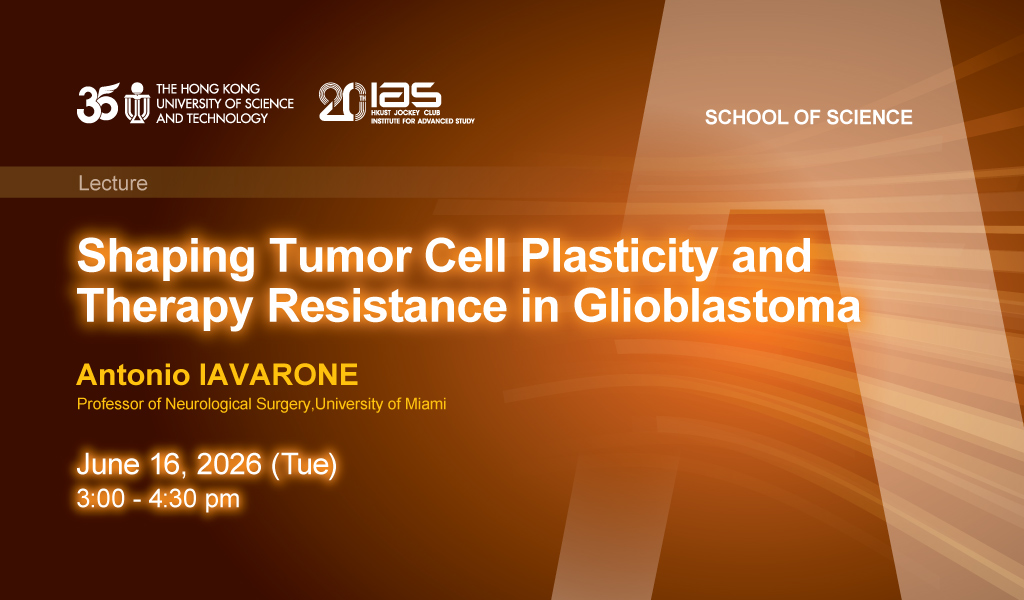
IAS / School of Science Joint Lecture - Shaping Tumor Cell Plasticity and Therapy Resistance in Glioblastoma
Abstract
Tumor heterogeneity fueled by plasticity and genetic diversification of cancer cells is key to therapy failure of malignant glioma. The speaker's team implemented spatial and genetic p...
11 May 2026
Seminar, Lecture, Talk
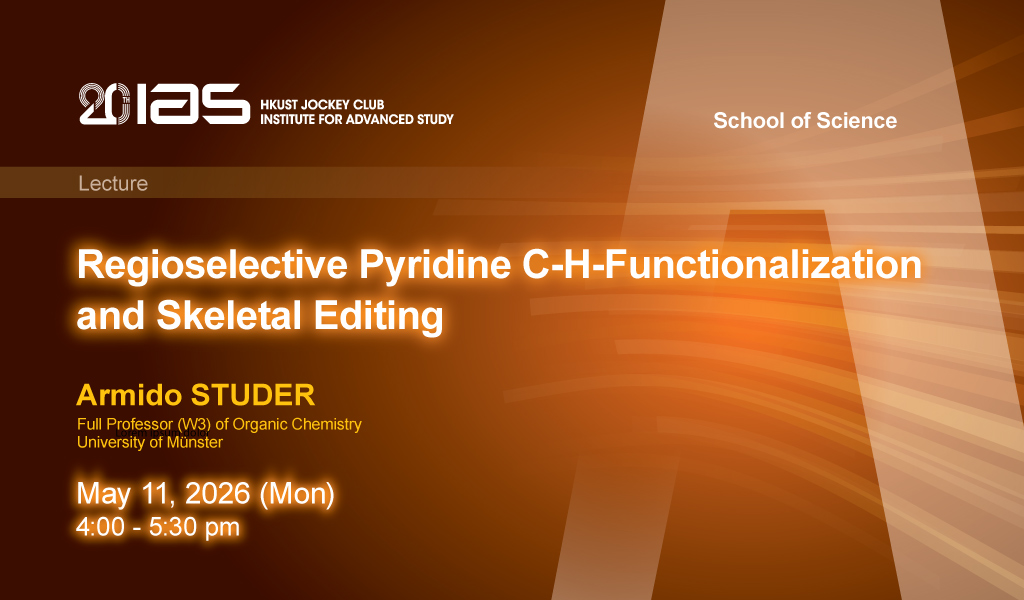
IAS / School of Science Joint Lecture - Regioselective Pyridine C-H-Functionalization and Skeletal Editing
Abstract
Pyridines belong to the most abundant heteroarenes in medicinal chemistry and in agrochemical industry. In the lecture, highly regioselective pyridine C-H functionalization through a d...