Migration reactions are indispensable tools in organic synthesis. Classical migration processes enable precise remote functionalization on molecular skeletons, yet these known pathways are largely restricted to single-site shifts. Orchestrating the simultaneous migration of two distant sites—and controlling chemo-, regio-, and diastereoselectivity at both migrating centers—has remained a long-standing scientific challenge.
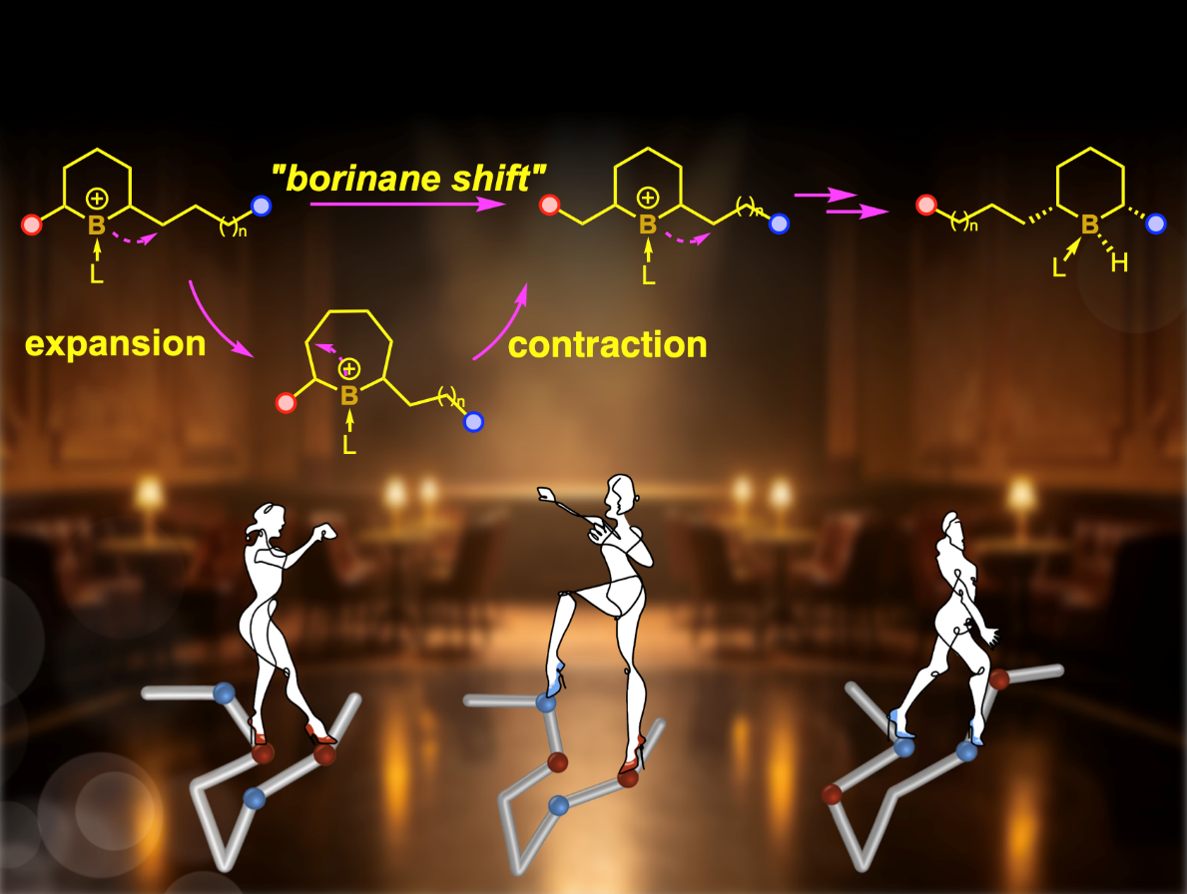
The team proposed a key concept: a borenium species bearing two B–H units can serve as a transient bridge, tethering two distant carbon sites into a boracycle through double hydroboration. Through a stepwise "ring contraction/ring expansion" mechanism, the borinane ring migrates along the carbon chain under the guidance of a directing group. This process ultimately delivers the most thermodynamically stable product with excellent regioselectivity and diastereoselectivity.
The team successfully demonstrated this concept using (2-cyclobutylvinyl)benzene and an IMe-borane as model substrates. Under borenium catalysis, the migrated borinane product was isolated in 80% yield. Through control experiments, intermediate trapping, and DFT calculations, the team validated the proposed “lead and follow” pathway, providing solid experimental evidence for the "entangled dual-site migration" mechanism.
This "boracycle rearrangement" represents a higher-order migration paradigm, expanding conventional single-site migration to dual-site migration along a carbon chain. The "entanglement" strategy for controlling chemo-, regio-, and diastereoselectivity across two distant sites provides a new reference for other dual-site modification processes beyond this work.
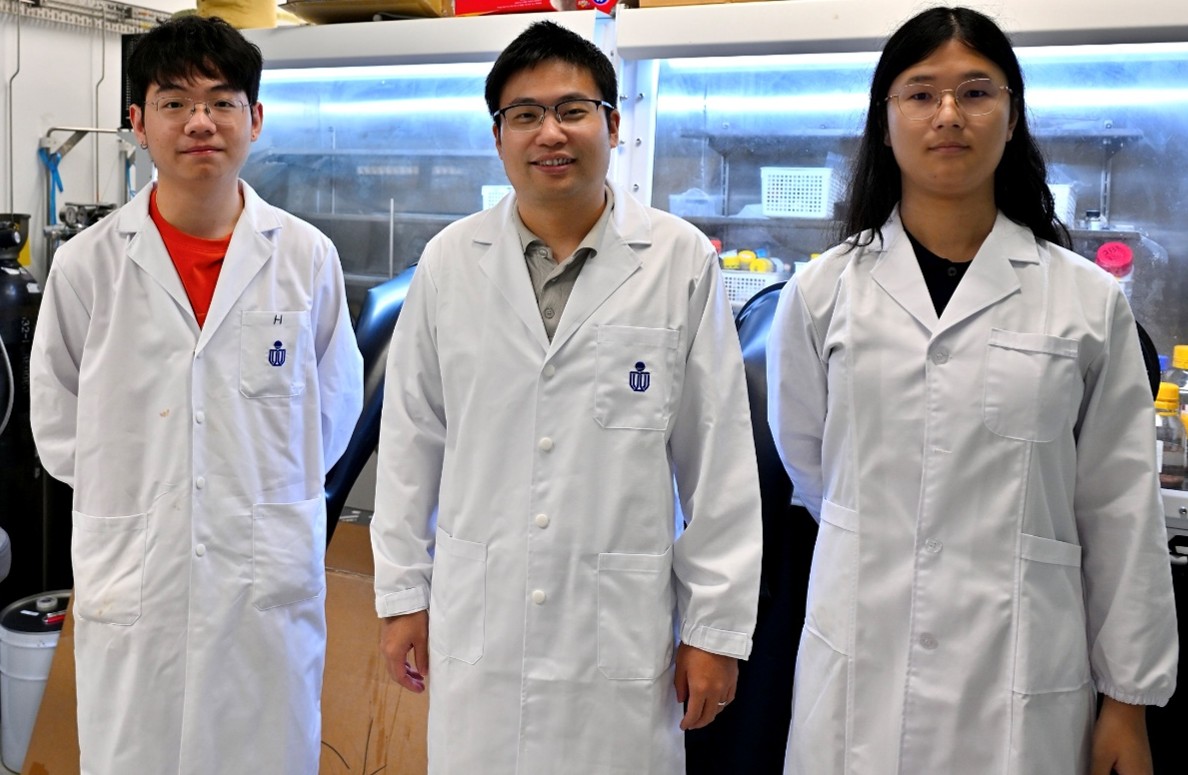
This study was published in Nature (Nature (2026). https://doi.org/10.1038/s41586-026-10931-8) in July 2026. The work was independently conducted at the Department of Chemistry, HKUST. The first author is PhD candidate ZHU Zheng. DFT calculations were performed by Prof. LIN Zhenyang and PhD candidate ZHANG Peiqi. The corresponding author is Prof. QUAN Yangjian.