More about HKUST

12 Jul 2023
2:00pm - 3:00pm
Seminar, Lecture, Talk

Speaker: Dr. Natalie Lok Kwan LI
Institution: Associate Editor, Nature Communications
Hosted By: Professor He YAN
Abstract
Launched in 2010, Nature Communications is the flagship open access journal from Nature Portfolio dedicated to publishing significant advances in each field in a multidisciplinary venue across all areas of science and technology. In this talk, I will introduce the journal with its aim and scope and give an overview of the editorial and peer-review process and what editors look for in a manuscript. I will provide tips on how to write a convincing cover letter, abstract and paper and how to prepare your manuscript for submission. This talk will also cover the recent trends and developments in scientific publishing including new forms of peer review and reporting of data, in addition to some possible misconceptions towards the journal and suggestions on how to prepare yourself for scientific publishing.
About the speaker
Natalie is an Associate Editor from the Applied Physics Team of Nature Communications, where she handles manuscripts mainly in the areas of photovoltaics and optoelectronics, such as solar cells and light-emitting diodes. She received her Ph.D. in Chemistry from the University of Hong Kong, where she also worked as a postdoctoral researcher.
12 Jul 2023
2:00pm - 3:00pm

Where
Room 4502, 4/F (Lifts 25-26), Academic Building, HKUST
Speakers/Performers
Organizer(S)
Department of Chemistry
Contact/Enquiries
Payment Details
Audience
PG students, Faculty and staff
Language(s)
English
Other Events
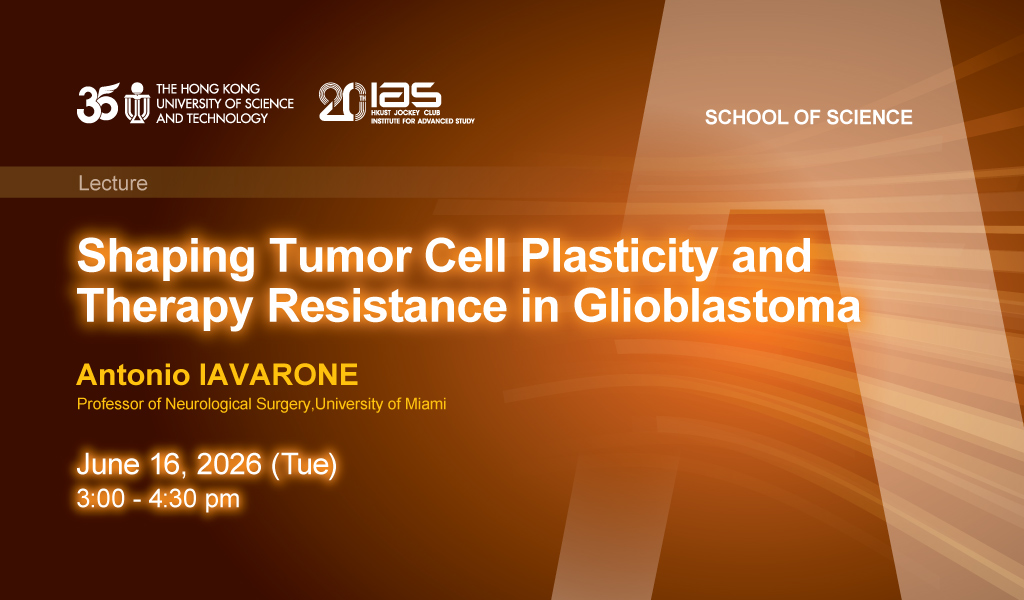
16 Jun 2026
Seminar, Lecture, Talk
IAS / School of Science Joint Lecture - Shaping Tumor Cell Plasticity and Therapy Resistance in Glioblastoma
Abstract
Tumor heterogeneity fueled by plasticity and genetic diversification of cancer cells is key to therapy failure of malignant glioma. The speaker's team implemented spatial and genetic p...
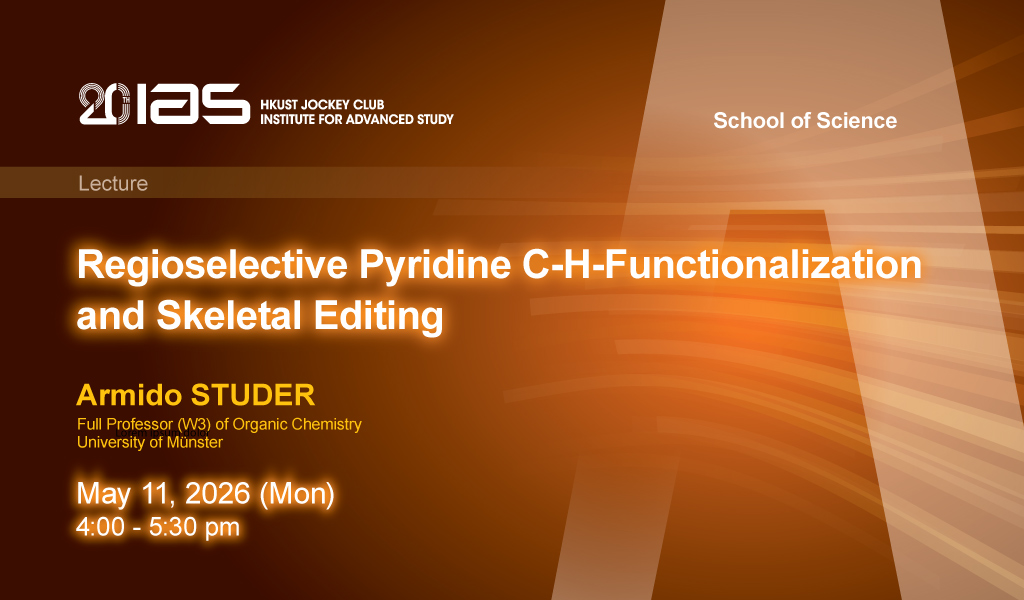
11 May 2026
Seminar, Lecture, Talk
IAS / School of Science Joint Lecture - Regioselective Pyridine C-H-Functionalization and Skeletal Editing
Abstract
Pyridines belong to the most abundant heteroarenes in medicinal chemistry and in agrochemical industry. In the lecture, highly regioselective pyridine C-H functionalization through a d...