

(This article was originally published on EurekAlert! on February 12, 2026)
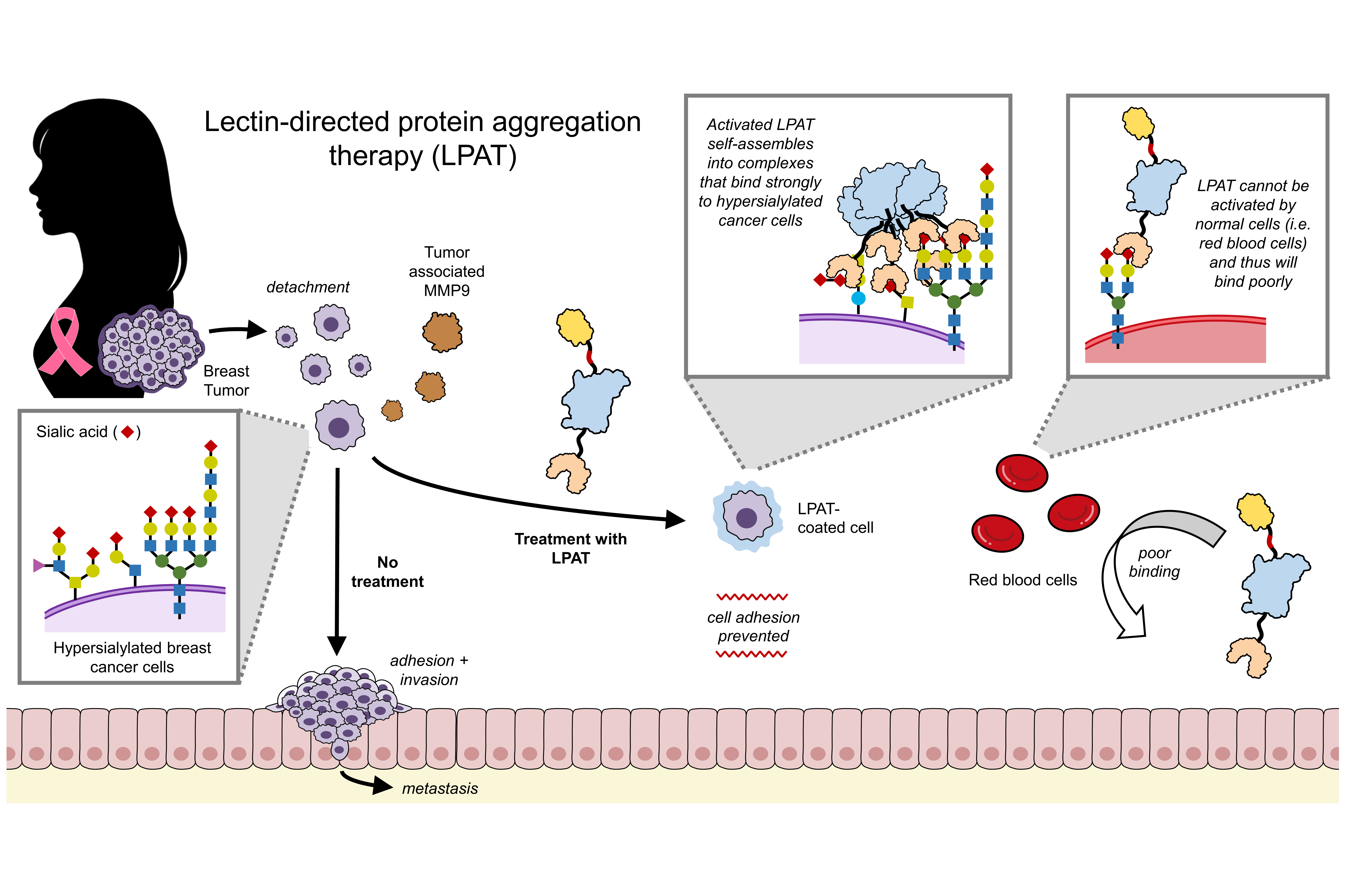
A research team led by Prof. Kenward VONG, Assistant Professor from the Department of Chemistry at The Hong Kong University of Science and Technology (HKUST) has recently achieved a significant breakthrough by bioengineering a new type of glycan-targeting system known as “lectin-directed protein aggregation therapy (LPAT)”. Using this technology, they developed a therapy capable of preventing the onset and growth of metastatic breast cancers in mouse models.
The significance of targeted anticancer therapies needs little introduction. With more selective ways to kill cancer cells, the adverse side effects typically associated with traditional chemotherapy can be avoided. At the forefront of cancer-targeting methods are monoclonal antibodies, which are typically engineered to recognize certain overexpressed biomarkers on cancer cell surfaces. Although the impact of antibodies in targeted therapies is unparalleled, one well-known limitation is their inability to discriminate between cancer-associated glycans and glycans found on normal and healthy tissues. As a result, numerous glycan-targeting antibodies have failed to proceed past clinical trials. This situation represents a significant lost opportunity, considering that many cancers are known to increase their surface glycan levels as they grow and metastasize to other parts of the body.
To address this challenge, Prof. Vong’s team recently published a study in Biomaterials presenting a new approach to selectively bind sialic acid-rich (hypersialylated) breast cancer cells using a bioengineered protein therapy. This therapeutic agent relies on the natural proteases secreted by highly metastatic cancer cells to release an activated protein, which can then undergo self-assembly into a hexameric protein complex that binds strongly to hypersialylated breast cancer cells. In contrast, when exposed to normal cells (i.e., red blood cells), the conditions are not met for the therapeutic agent to be activated, resulting in poor binding. Utilizing this technology, the adhesive, invasive, and migratory activities of highly metastatic breast cancer cells were all shown to be significantly impaired. Furthermore, the research team also demonstrated that this therapy could completely inhibit the onset of metastatic lung tumors in mice.
Reflecting on their achievement, Prof. Vong remarked, “The level of glycan discrimination we have observed is not something that can be easily achieved with antibody technology. And since we have only scratched the surface of this technology, we are very excited to further explore the potential for creating a metastasis prevention therapy.”